THE JOY OF POETIC MULTILINGUALISM: THE SOUNDS OF BRIGHT COLORS
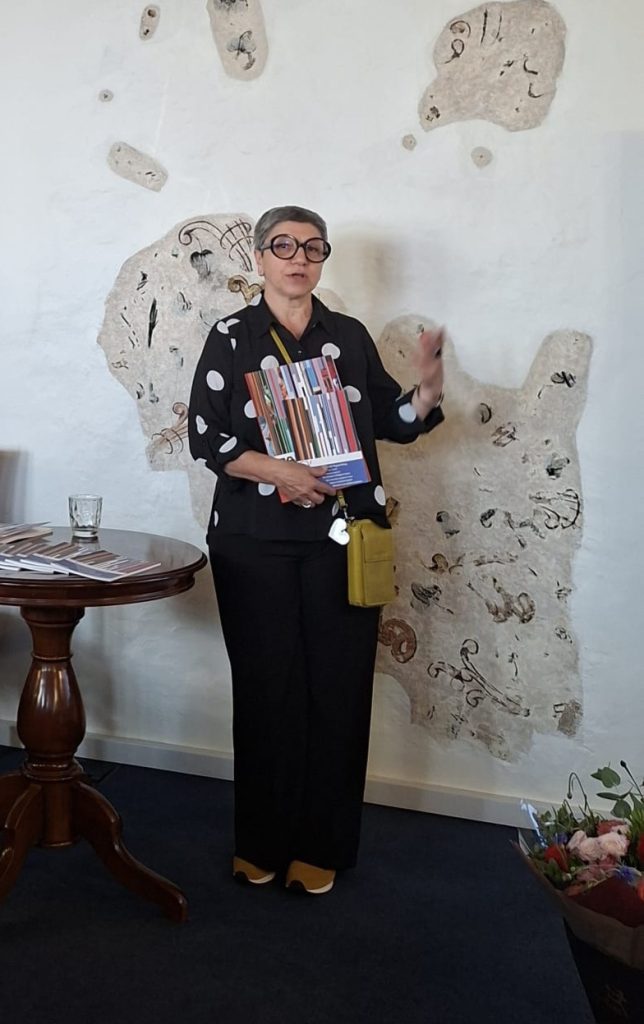
On the evening of August 14th, an important international and interdisciplinary event was held at Peoples’ Museum of Tallinn as a finale to the exhibition “Armenia in Images: Sounds, Colors, Patterns” which has been attracting visitors from all over since early May. After having attended the earlier “Parallels: Contemporary Armenian Art” exhibition organized by Ljudmilla Mesropjan at the Estonian National Museum in Tartu, poet, philologist, and professor of linguistics Ekaterina Velmezova was inspired by the artworks on display there to create a series of short poetic ‘meditations’ in response to them.
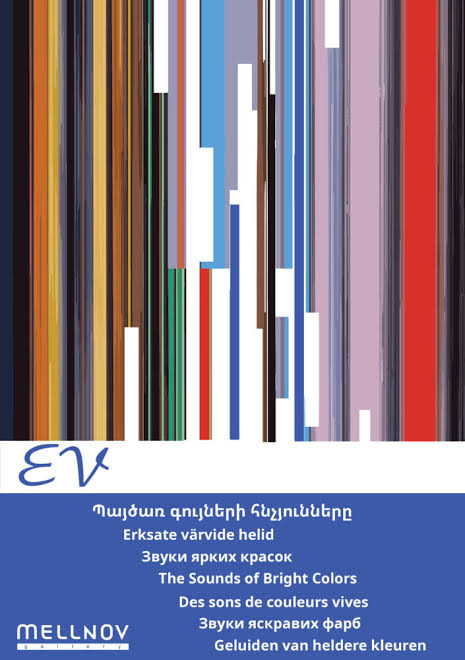
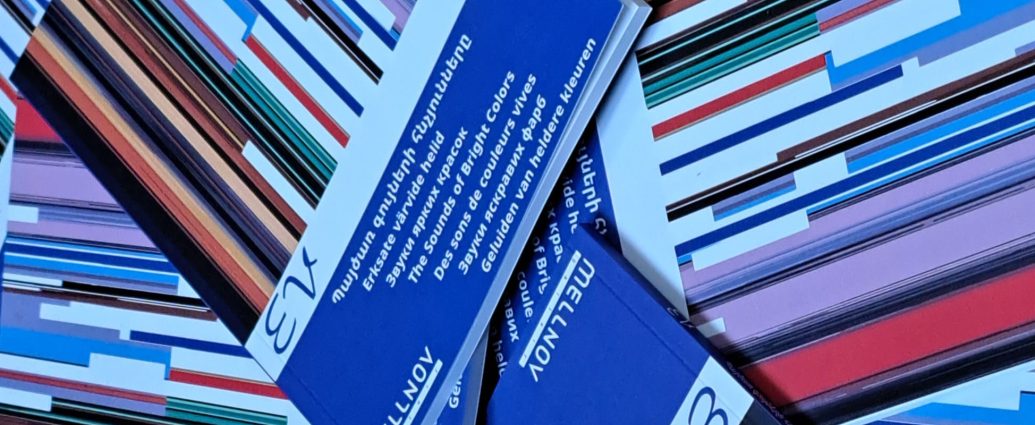
Published now as The Sounds of Bright Colors, the result is a delightful collection reproducing 26 of the most striking and original artworks of the Armenian artists paired with Ekaterina Velmezova’s playful and profound meditations appearing in seven languages – Estonian, Armenian, Ukrainian, French, Russian, English, and Dutch – on each facing page, and on the evening of the 14th, the poet was in attendance at the gallery to read aloud these meditations to an international audience of art lovers and poetry lovers alike.
After the event the poet was asked several questions.
— How did the idea to create a multiligual poetry collection arise?
E.V.: One fine spring day, the book came into being spontaneously, without any preliminary plan… The impression left by the exhibition and my conversations with its beautiful organizer Ljudmilla Mesropjan were so vivid that a response to these impressions emerged naturally. The paintings at the exhibition were highly diverse, so the idea of meditating about them in multiple languages arose of its own accord. Let me name the wonderful artists whose paintings inspired my poetic responses – they are (in the order in which I encountered them at the exhibition in Tartu): Artouche Mkrtchian, Hermine Demiro (Demirtshyan), Mnatsakan Ezekyan, Vera Arutyunyan, Vahan Shahbazyan, Karine Dulyan, Zara Manucharyan, Liana Asatryan, Haiduk Smbatyan, Gevorg Endza Babakhanyan, Lusine Naghdalyan, Artsrun Asatryan, Anahit Panosyan, Garry Arzumanyan, Tigran Tadevosyan, Susanna Galstyan, Sona Sahakian, Gagik Tadevosyan, Aram Mashuryan, Diana Levonyan, Anna Torosyan, Gevorg Sahakyan-Gevs, Tamara Harutyunyan, Vachagan Aloyan, Anaid Keshishian, and Artyom Basenci.
Contemporary Armenian art – sunny, vibrant, thoughtful, and warm, yet in some ways deeply tragic – is extraordinarily diverse, and the exhibition reflected this beautifully. This diversity gave rise to a multilingual way of looking at them. It may also have played a role that I am a linguist specializing, in particular, in translation studies; perhaps, on some level, this represented an unconscious professional challenge for me. It was rather easy and interesting to express myself in four languages – Estonian (which was especially important, given that the exhibition took place within the Estonian cultural space), Russian, French, and English; it was slightly more challenging in Ukrainian and Dutch; and the texts were translated into Armenian by the wonderful artist Zara Manucharyan – my huge thanks to her! And, of course, warm thanks again to the wonderful organizer who supported the idea of the project from the very first moment.
— Why is multilingualism important to you?
E.V.:Multilingualism is linked to diversity – and diversity is beautiful in itself. Of course, there are limits to this beauty, but as they say, « don’t fear perfection – you will never achieve it anyway. » Similarly, don’t fear diversity; in its absolute form, it is unattainable, yet the path toward it is amazing – just like the path to anything that is both unattainable and marvelous.
Here I am speaking about multilingualism and linguistic diversity – for every language can be looked at as a unique and astonishing world – yet one can also generalize a bit and, in this context, speak of more than just verbal languages… Indeed, painting and poetry are themselves distinct languages, albeit languages that understand and complement one another remarkably well. At this point, I felt an urge to revisit the terminological distinction between ‘langue’ and ‘langage’ and the associated question of diversity – but that is a story for another time.
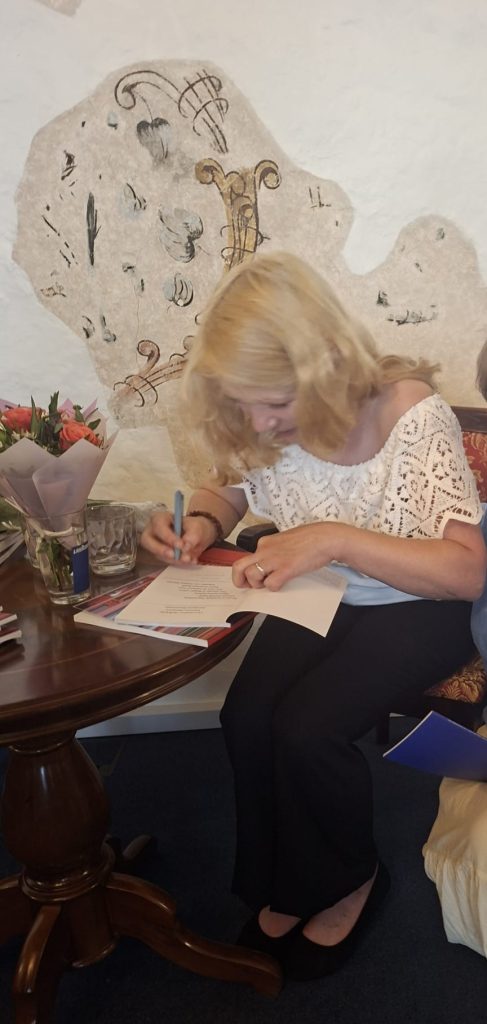
— Indeed, besides your poetry, you are a professional philologist. Speaking about multilingualism, do you think that you can present this project also to your students?
E.V.: I hope so! We might even take a look at this project as part of a university course on translation and translation studies – exploring how thoughts and feelings can shift slightly when expressed in different languages. Philology students usually take great pleasure in getting to know and to analyze various languages and in expressing themselves in them. Moreover, even if the book is not an example of « ekphrasis » in the conventional sense—after all, the focus was less on description than on impressions, on a kind of dialogue with the works of art – it nonetheless serves to remind us of ekphrasis as a distinct phenomenon. It is also worth mentioning the sheer diversity of descriptive languages – encompassing not only poetic but also scientific languages – and the fact that one can (and should!) support a particular verbal language by writing poetic or scientific texts in it, or by translating such texts into it… although languages of broad international reach played a role in our project too – and, for that matter, I am currently taking great pleasure in communicating with you in English!
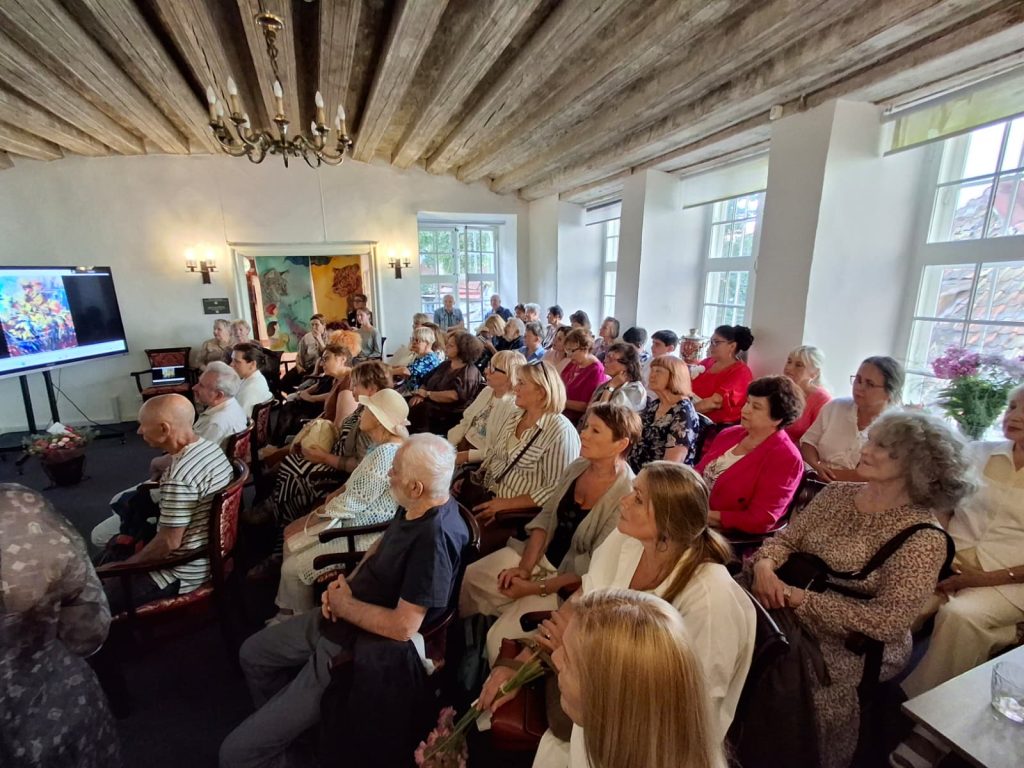
The festive spirit of the event was a perfect culmination to the three-months long exhibition, as it will soon leave Estonia for overseas exhibitions, taking with it not only its collection of Armenian art, music, crafts and visual images – but now, as well, multilingual poetry from its visit to Estonia, a true joining of friendship, culture, mutual appreciation, languages, and art.
Donald Favareau, USA and Tokyo